The short version
Fly control in Idaho comes down to the water you add. With only about 12 inches of rain a year across the 13 Idaho cities in our data, almost every outdoor breeding site is one people irrigate: lawns with clippings, compost, and animal pens near farmland. The 89F summer high runs a house fly through its cycle in under two weeks from June into September, and the 23F winter low ends it. Dry the source, then clear the adults.
- Idaho's outdoor fly season runs roughly June through September, ending at the 23F winter low.
- With 12 inches of rain a year, irrigation and livestock create nearly every outdoor source.
- At the 89F summer high, a house fly finishes in under two weeks, so weekly cleanup keeps pace.
- Homes near farmland around Nampa, Caldwell, and Idaho Falls get flies from sources they do not own.
- Winter flies in an Idaho house mean a carcass, a drain, or a leak, not the weather.
- Ask an Idaho provider what source they found before agreeing to a spray.
Idaho homeowners with a July fly problem that a can of spray does not fix, people on the edge of farmland near Nampa, Caldwell, or Idaho Falls who get flies from a neighbor's operation, renters in Boise or Meridian apartments with drain flies, restaurant and food-processing managers, and anyone with horses, chickens, or a serious compost pile. If the flies are tiny with red eyes over the fruit, that is a different page.
What to look for
The 23F winter low shuts outdoor breeding down from about October into May, leaving drain flies, phorids, and carcass-fed blow flies as the indoor winter problems. The 89F median high across Idaho cities in our data is close to the 95F at which Texas A&M AgriLife Extension clocks a house fly at about 7 days, so a July cycle runs under two weeks, and each female lays 75 to 150 eggs per cluster per the University of New Hampshire Extension. Temperature sets a fast summer clock. Homes near agricultural edges around Nampa, Caldwell, and Idaho Falls can have heavy fly pressure with nothing wrong on their own lot. The sources that work are the wet ones people maintain: irrigated lawns and the clippings they produce, compost that gets watered, pet runs, and above all manure from horses, cattle, and chickens on and around the state's farmland. Humidity near 58% and roughly 12 inches of rain a year mean organic material left alone dries before maggots can finish, which is why a dry Idaho yard has few flies. The climate filters the outdoor group hard. Fruit flies are their own subject. Phorid flies use any wet rot, including a sewer leak under a slab or a soggy planter. Drain flies breed in pipe biofilm and condensate pans. House flies, blow flies, flesh flies, and stable flies breed outdoors in garbage, manure, pet waste, clippings, and carcasses. Idaho's flies belong to the usual four groups.
- 1Gray house flies thick at the back door every July afternoon, worse when the wind comes off a nearby field or feedlot.
- 2Sharp ankle bites near a horse pen, chicken run, or watered compost pile, which is the stable fly.
- 3Metallic blue or green flies at a bedroom window in January, pointing to a dead mouse in a wall.
- 4Fuzzy moth-shaped flies on the bathroom tile of a Boise apartment, present regardless of season.
- 5Small dark flies running across a bathroom floor before flying, a phorid clue pointing to a leak or a soggy planter.
- 6Maggots in a trash can that sat through a hot week between pickups.
- 7Fly specks collecting on window frames and light fixtures by August.
Why it’s worth acting soon
- In an 89F stretch, a can missed on pickup day becomes a new generation in under two weeks.
- Stable flies near animals bite pets and people about every 12 days until the wet manure is hauled.
- A carcass in a wall keeps producing blow flies for one to two weeks after the maggots start.
- Phorid flies from a slab leak mean water soaking the ground under the house while you wait.
- A food-processing or restaurant floor with visible drain flies is an inspection finding waiting to happen.
can carry pathogens from waste to food surfacesHouse fliesUS CDC Treatment options and typical costs
Source removal and sanitation correction
Provider quote required
Remove or physically clean the organic material supporting development, then correct the handling practice that allowed it to accumulate.
- Time
- Depends on access and source complexity
- Best for
- Confirmed waste, drain, food-residue, animal, or organic-material sources
Exclusion and operating changes
Provider quote required
Repair screens and door gaps, improve door practices and air movement, relocate attractants, and reduce entry opportunities.
- Time
- Often staged with maintenance work
- Best for
- Exterior pressure and entry-driven patterns
Monitoring and targeted control
Provider quote required
Use correctly placed devices to measure activity and support a treatment tied to the identified species and source.
- Time
- Single assessment or continuing program
- Best for
- Commercial facilities and recurring or unclear patterns
Plumbing or structural investigation
Separate inspection or contractor quote may apply
Escalate when evidence suggests damaged drains, sub-slab moisture, concealed animal material, or another inaccessible source.
- Time
- Varies by diagnostic work and repair
- Best for
- Persistent activity without an accessible source
Prices are typical published ranges. Ask what’s included before you compare quotes.
 Drain flies breed in the slime inside drains. A stiff brush and an enzyme cleaner clear it.
A Idaho source-inspection sequence.
Inspect entry routes, waste, animal areas, drains, beverage or food residue, cleaning tools, condensate, and concealed-source clues. Record the affected rooms or zones, approximate counts, time, and fly appearance. Retain a specimen or clear photograph when identification is uncertain.
flies activity by season.
In Idaho, checking the foundation, gaps around doors and windows, and any moisture or clutter near the structure usually turns up the conditions that are letting them in. The most useful first step in Idaho is to note where you have seen flies and when they appear, because that timeline is what lets a provider focus on the right area instead of treating the whole property. Scheduling before the busy stretch, rather than after it, tends to mean faster service and a more accurate quote, and a local provider can point out the conditions that matter most in Idaho.
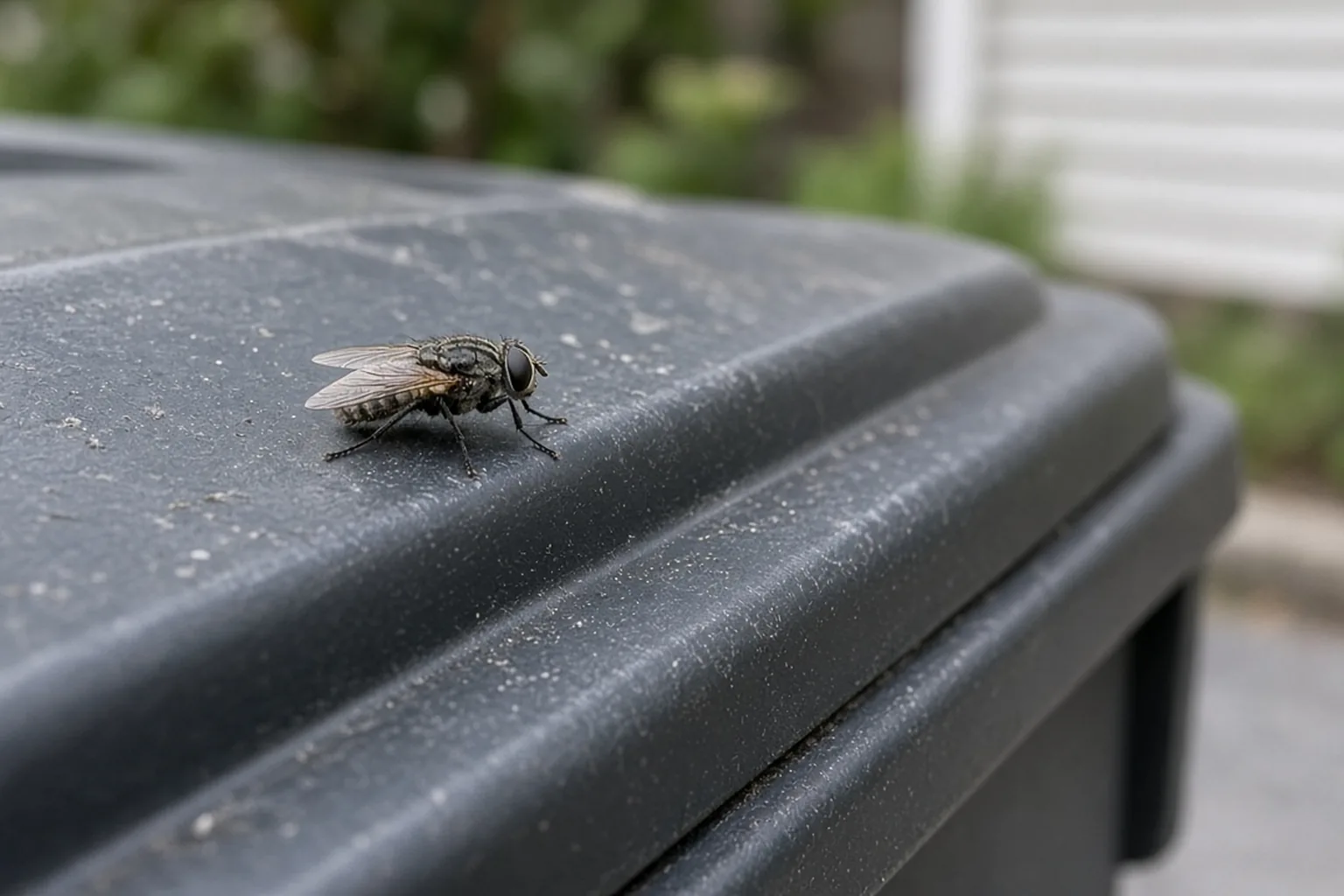 Trash bins are the top source in summer. Keep lids closed and rinse bins every week or two.
Small flies near drains and wet areas.
Organic film inside drains, overflows, beverage equipment, mop areas, leaks, and other persistently wet locations can support different small flies. Confirm the developmental site before treating. Physical cleaning and repair address the material; adult treatment alone does not.
Larger flies near waste, doors, or windows.
Trace waste handling, animal material, door and screen conditions, loading activity, and any sudden localized emergence. Window concentrations may show where light-seeking adults collect without proving where they developed.
Commercial monitoring that supports decisions.
Number devices, map zones, record counts by date, document sanitation and structural findings, assign corrective actions, and compare follow-up counts. Device placement should support the plan without increasing entry or contamination risk.
How to compare Idaho providers.
Confirm the company performing the work, applicable credentials, inspection charges, treatment scope, preparation requirements, products, follow-up terms, and written warranty language, if any. Ask what observation supports each recommendation.
What this guide does not claim.
This page is not a Idaho surveillance report, a record of local inspections, a provider coverage written terms, a citywide or statewide price study, or evidence of treatment outcomes. First-party figures require a source system, date range, sample size, method, and reviewer.
What affects the price
- Whether the source is your irrigated compost or a farm neighbor's manure you cannot touch.
- Exclusion work such as screens, sweeps, and light traps on a home or warehouse near farmland.
- Access to a carcass in a wall or attic, and repair afterward.
- The short Idaho season, which makes a June-to-September program cheaper than a year-round one.
- Horses, cattle, or chickens on the property, which keep flies breeding all summer.
- Number of floor drains to treat in a food-processing plant, restaurant, or apartment building.
- Follow-up visits to confirm larvae are gone rather than a quiet week.
📊
Where are flies most concentrated?
When to call for help
Call a fly control company in Idaho when the source is not on your property or not somewhere you can reach. A home on the edge of farmland near Caldwell or Idaho Falls with heavy summer flies and a clean yard needs exclusion and traps sized by someone who has done it. Blow flies in a closed Boise house in January mean a dead mouse in a wall. Phorid flies in a slab home with no visible wet spot often trace to a sewer line under the concrete, and a provider should say so rather than spraying. Food-processing and restaurant floors with drain flies should be treated at the first sign, since the biofilm produces adults daily. Ask for the source finding in writing before approving any product.
What you can do yourself
Idaho's dry air makes DIY fly control unusually effective when the source is yours. Most summer house fly problems in Boise, Meridian, or Nampa trace to something being watered, and with 58% humidity the source stops working as soon as you let it dry: lid the can, scoop the dog run twice a week, let clippings dry before bagging, and stop watering the compost. A tape test over the shower drain overnight confirms drain flies, and a brush plus a bacterial cleaner handles the film. for help with what you cannot dry out or reach. A farm neighbor's manure heap is not yours to fix, so exclusion and traps are the answer, and sizing them is a provider's job. A mouse that died in a wall over winter, a sewer break under a slab, floor drains in a processing plant, and your own horses or chickens are also beyond a weekend. Providers can add insect growth regulator to larval sites and set up a summer program that stops when the cold does the work. A spray-only visit with no source named buys under two weeks in an Idaho July.
Flies in Idaho
Housing in Boise, Meridian, Nampa, Caldwell, and Idaho Falls carries a median value near $360,000 and mixes established neighborhoods with fast-built subdivisions on former farmland. The flies that persist come from what people water and what livestock produce. For flies, that means a short outdoor season from roughly June to September, a hard stop when the cold arrives, and a climate dry enough that most organic material dies before maggots finish. Idaho's 13 cities in our data sit in a continental zone with a median summer high of 89F, a winter low of 23F, humidity around 58%, and about 12 inches of rain a year. Basements and crawlspaces in older homes are where mice die in winter and draw blow flies, and food-processing plants and restaurants across the state carry the drain fly load that the dry air never touches. Irrigated lawns and their clippings are the main homeowner-created source. That last point matters: a new home on the edge of an irrigated valley may sit within a short flight of a dairy, feedlot, or manure pile, and no amount of yard sanitation fixes flies that breed across the fence.
Fly tips from the experts
Where are the flies coming from?
The kind of fly tells you where to look. Around Idaho, note its size, where it gathers and when it shows up. Then go after the source.
Small flies near drains
Tiny, fuzzy flies near a sink or shower usually breed in the slimy film inside the drain. Scrub the drain with a stiff brush. Spraying the adults won’t stop them.
UC IPM: drain fliesHouse flies around doors and trash
House flies breed in garbage, pet waste and rotting plants. Clear those out first, then add screens and keep doors closed. Traps help, but they don’t fix the source.
EPA: managing fliesSlow flies at the windows in fall?
In colder states like Idaho, sluggish flies at upstairs windows in fall, winter or early spring are often cluster flies. They spend winter in attics and walls but don’t breed indoors. Sealing gaps outside in late summer keeps them out.
University of Minnesota Extension: fliesBased on guidance from university extension services and the EPA.
How we check our sourcesLocal research
Flies in Idaho: what the public record shows
Before you compare quotes, it helps to know which flies actually live in Idaho, when they are busiest, and what the state figures look like. Everything below links to the agency or university page it came from.
Idaho dairy inventory driving fly pressure
Idaho has one of the largest dairy herds in the country, and confined dairy manure is the single biggest filth fly source in the Magic Valley.
USDA National Agricultural Statistics ServiceFly species recorded in Idaho
- House fly (Musca domestica) — Non-biting; breeds in manure, garbage, lawn clippings, decaying produce. 45 days at 60°F to 7 days at 95°F. Carries bacteria and viruses causing diarrhea, cholera, food poisonin…
- Little house fly (Fannia canicularis) — Most numerous in cooler spring and fall; males swarm 5–6 ft above ground in protected areas; develops in animal waste and fermenting grass clippings.
- Stable fly (Stomoxys calcitrans) — Biting fly with bayonet-like proboscis; about 12 days egg to adult; peaks early summer.
- Flesh fly (Sarcophagidae) — Large gray flies with black stripes; carcasses in attics, chimneys, walls.
When flies are busiest in Idaho
Filth flies overwinter as larvae or pupae and emerge as spring temperatures rise, with peak pressure in summer near dairy and feedlot manure.
PNW 770, a joint Oregon State, Washington State, and University of Idaho publication, treats fly management as source removal first: locate the larval medium with light traps and drain covers before treating adults.
Sources: USDA National Agricultural Statistics Service; Pacific Northwest Extension (Oregon State University, Washington State University, University of Idaho); Indoor Flies and Their Control; University of New Hampshire Extension; Flies (Home and Landscape). Figures are quoted as the source prints them. How we check our sources
Simple ways to keep flies away
- Lid the garbage can and get weekly pickup from June through September, when 89F highs run the cycle in under two weeks.
- Let clippings dry before bagging; in 58% humidity a thin layer is dead within days, a watered pile is not.
- Stop watering the compost pile in summer and keep it in a closed bin; dry compost does not breed flies.
- Scoop pet waste twice a week in summer, since the dog run is often the only wet spot on a dry lot.
- Seal gaps at the sill plate and utility lines in September so mice cannot move in and die inside over winter.
- Repair screens and fit door sweeps before June, especially on homes near farmland around Nampa and Caldwell.
- Brush bathroom drains monthly and use a bacterial cleaner, since indoor pipes stay wet in any weather.
- If you keep horses or chickens, haul manure weekly and keep bedding dry; stable flies need about 12 days.
- Pour water into rarely used floor drains monthly so the trap stays full and phorids cannot come up.
 A good quote names the fly, the source, and what will be cleaned, sealed or treated.
Did you know?
House fly larvae finish feeding in 3 to 7 days, which is why a watered compost pile can be producing adults within two weeks of a July heat wave.
Blow flies can go from egg to adult in as little as 7 days, so a mouse that dies in a wall in January produces a swarm by February.
An adult house fly lives up to three weeks, about the length of an Idaho heat wave.
Questions people ask
What fly problems occur in Idaho?
Several fly groups may occur, but their importance varies by region, season, property, and source. Identification and the sighting pattern are more useful than assuming one statewide problem.
Does Idaho weather identify the source?
No. Weather can affect activity and development, but it does not prove where flies are breeding.
How much does fly control cost?
This site does not publish an invented statewide price. Obtain a written scope and quote from the provider performing the work.
Will spraying visible flies solve the problem?
Adult treatment may reduce visible activity, but it does not remove larval habitat or correct entry.
How should a commercial program be documented?
Use a zone map, numbered monitoring devices, dated counts, findings, assigned corrective actions, and follow-up records.
Does Fly Exterminator perform treatments?
Confirm identity, credentials, service area, charges, products, and terms directly. No.
What are the tiny black flies around my houseplants?
The adults are a nuisance but harmless, and the larvae feed on fungus and roots in wet soil. Letting the top inch of soil dry between waterings usually breaks the cycle. Almost certainly dark-winged fungus gnats, which lay their eggs in moist potting soil and were the single most common fly in a 2012 home study. Bertone and colleagues found them in 96% of the 50 North Carolina homes they inspected, a small regional sample that measured presence rather than infestation.
Why do I suddenly have big shiny flies in my house?
A sudden indoor cluster in one area often means a dead rodent or bird in a wall, chimney or attic. Finding and removing the source usually ends the problem within days. Metallic blue or green flies are usually blow flies, which breed in decaying meat, carrion and garbage. They are common indoors: Bertone and colleagues found blow flies in 48% of the 50 North Carolina homes they searched in 2012, a small regional sample that measured presence, not infestation.
Sources (17)
The facts in this article come from the public sources listed above. Every home is different, so ask the company you talk to about pricing and what’s included. Published by Fly Exterminator · Updated September 11, 2026 · How we write these guides