Fly Control in Louisiana: Source Inspection and Prevention
Fly control in Louisiana should begin with identification and a source map, not a statewide treatment assumption. Long warm seasons, heavy moisture, food-service activity, multifamily buildings, ports, warehouses, storm recovery, outdoor waste, and animal areas create distinct drain, waste, entry, and concealed-source patterns. This guide organizes the inspection path and helps readers compare independent providers without claiming that a remote page has diagnosed a property.
Request Provider Contact
Send your request to the provider-matching network. Response times vary.
Across Louisiana, recurring fly control should begin with identification and a source map; sanitation, exclusion, monitoring, repair, and treatment should follow the evidence.
Key Takeaways
- →Statewide climate context cannot identify a property-level source.
- →Adult knockdown does not remove larval habitat.
- →Commercial programs should document zones, counts, findings, and corrective actions.
- →Confirm provider credentials, scope, pricing, and follow-up in writing.
Who This Is For
This guide is for Louisiana homeowners, renters, landlords, restaurant operators, property managers, and facility teams who need to distinguish fly entry from indoor breeding and compare providers using a source-based scope of work.
The Problem
Several unrelated flies can be described as “small flies” or “large flies.” House and blow flies may track waste, animal material, or concealed organic sources. Drain or moth flies develop in wet organic film. Fruit flies and related small flies can track fermenting residue. Phorid flies may justify plumbing or sub-slab investigation. Cluster flies use buildings for seasonal shelter and do not indicate the same sanitation problem. Warm and humid conditions can support extended activity, but the developmental source must still be confirmed at the property.
Warning Signs
- •Repeated adults in the same zone while doors and windows remain closed
- •Small flies resting near drains, wet equipment, beverage stations, or mop areas
- •Larger flies clustering at windows or emerging suddenly in one part of a building
- •Visible larvae or pupae near waste, drains, animal material, or another organic source
- •Monitoring counts that remain elevated after adult-only treatment
Risks of Waiting
- ⚠Breeding material can continue producing adults after visible flies are killed.
- ⚠Food and sanitation concerns can expand when waste, drains, or moisture are not corrected.
- ⚠Repeated pesticide use without source identification can add cost without resolving the cause.
- ⚠A plumbing, moisture, or concealed-source problem may worsen while attention stays on adult insects.
Louisiana fly source triage
Treatment Options
Source removal and sanitation correction
Provider quote requiredRemove or physically clean the organic material supporting development, then correct the handling practice that allowed it to accumulate.
Exclusion and operating changes
Provider quote requiredRepair screens and door gaps, improve door practices and air movement, relocate attractants, and reduce entry opportunities.
Monitoring and targeted control
Provider quote requiredUse correctly placed devices to measure activity and support a treatment tied to the identified species and source.
Plumbing or structural investigation
Separate inspection or contractor quote may applyEscalate when evidence suggests damaged drains, sub-slab moisture, concealed animal material, or another inaccessible source.
A Louisiana source-inspection sequence
Record the affected rooms or zones, approximate counts, time, and fly appearance. Inspect entry routes, waste, animal areas, drains, beverage or food residue, cleaning tools, condensate, and concealed-source clues. Retain a specimen or clear photograph when identification is uncertain.
Small flies near drains and wet areas
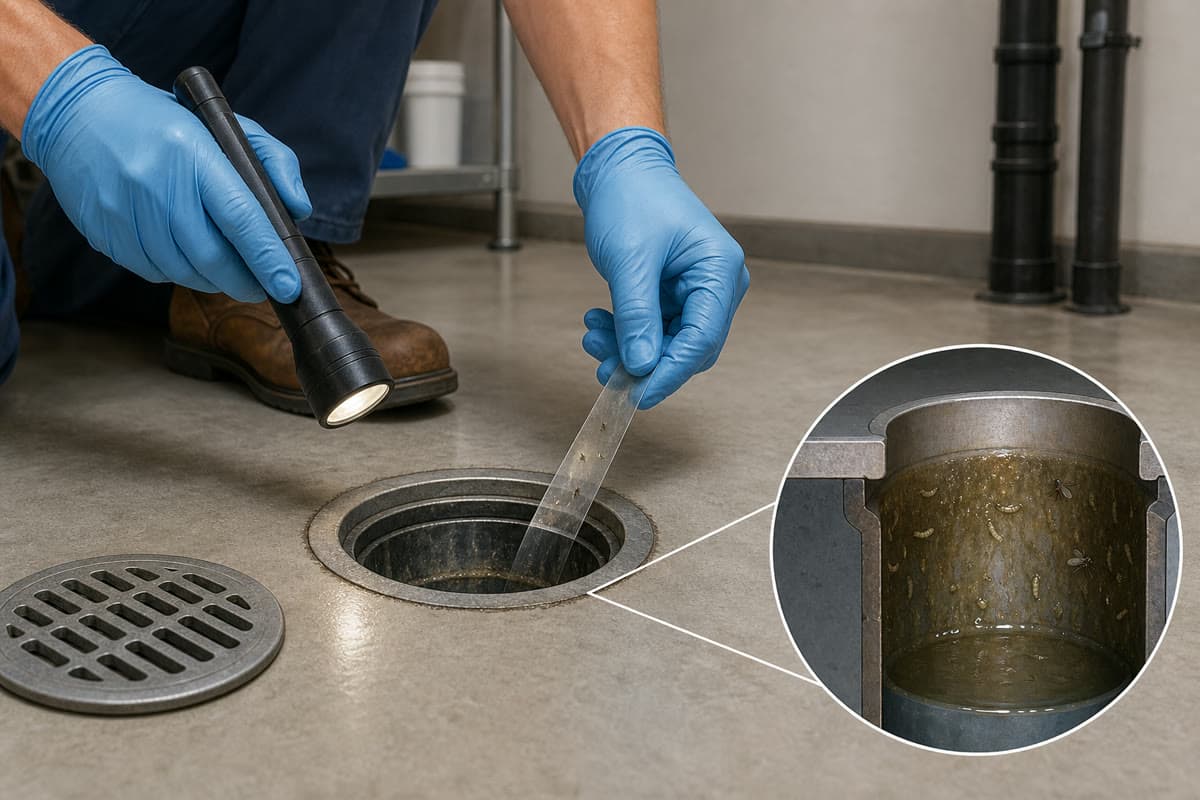
Confirm the developmental site before treating. Organic film inside drains, overflows, beverage equipment, mop areas, leaks, and other persistently wet locations can support different small flies. Physical cleaning and repair address the material; adult treatment alone does not.
Larger flies near waste, doors, or windows
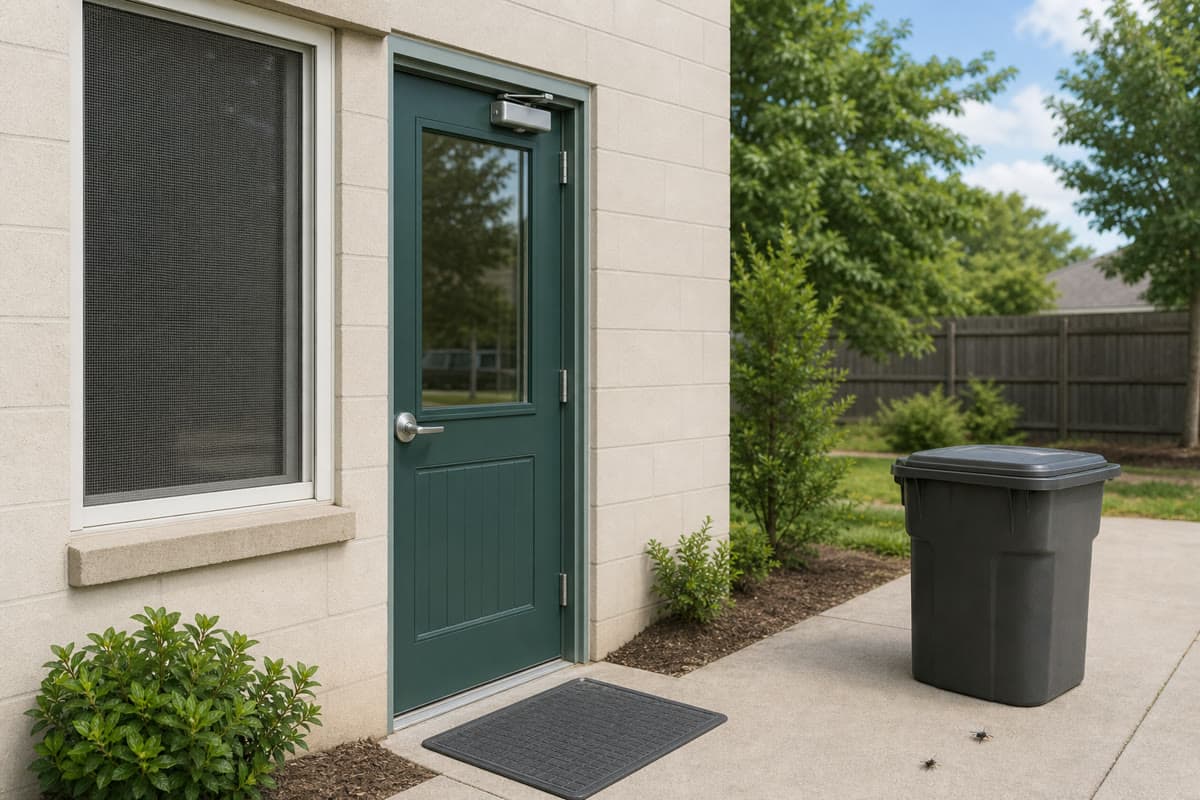
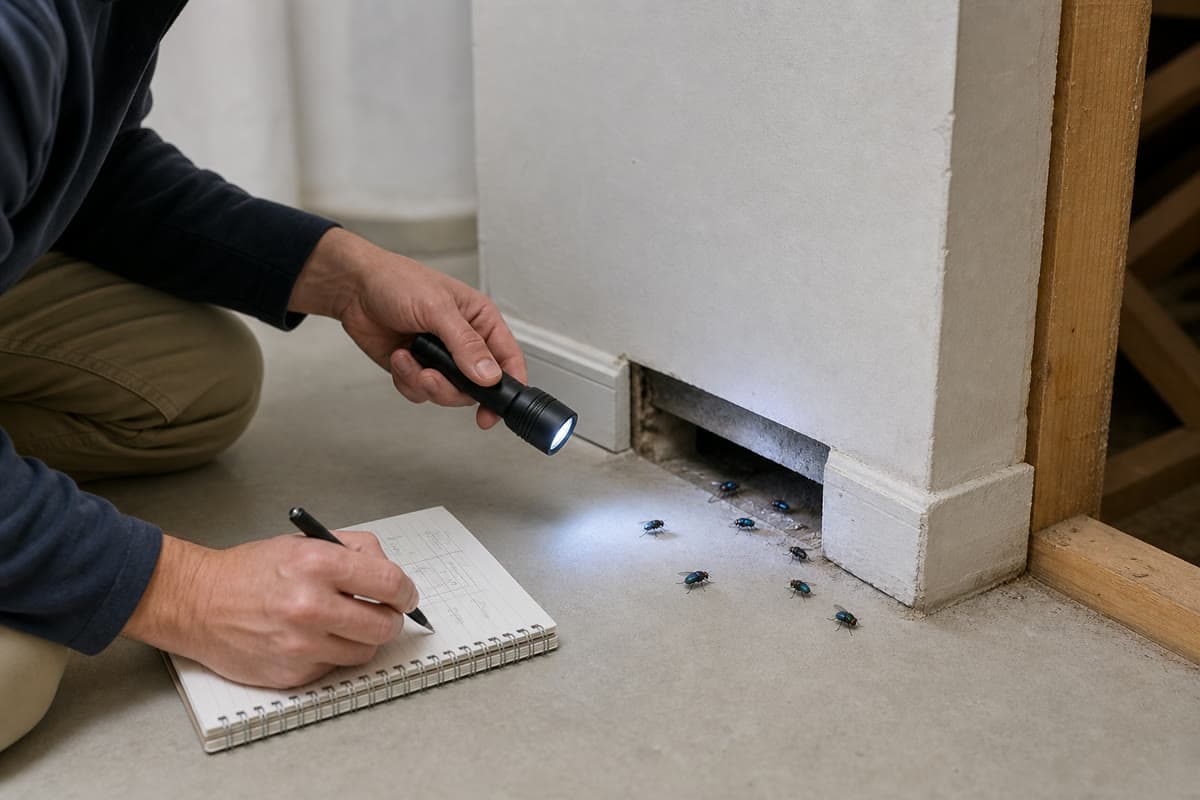
Trace waste handling, animal material, door and screen conditions, loading activity, and any sudden localized emergence. Window concentrations may show where light-seeking adults collect without proving where they developed.
Commercial monitoring that supports decisions
Number devices, map zones, record counts by date, document sanitation and structural findings, assign corrective actions, and compare follow-up counts. Device placement should support the plan without increasing entry or contamination risk.
How to compare Louisiana providers
Confirm the company performing the work, applicable credentials, inspection charges, treatment scope, preparation requirements, products, follow-up terms, and written warranty language, if any. Ask what observation supports each recommendation.
What this guide does not claim
This page is not a Louisiana surveillance report, a record of local inspections, a provider coverage written terms, a citywide or statewide price study, or evidence of treatment outcomes. First-party figures require a source system, date range, sample size, method, and reviewer.
How Louisiana Properties Should Prepare for fly Service
Before a professional visit in Louisiana, clear access to baseboards, utility areas, kitchens, bathrooms, garages, crawl spaces, and any location where activity has been seen. Take photos of sightings, save damaged materials when safe, and note when the problem is most active. This helps the technician confirm the species, find nesting or entry points, and choose a treatment plan that matches the property instead of relying on a generic spray-and-leave visit.
Questions to Ask Before Booking fly Control
Ask whether the inspection is included, what treatment methods are being proposed, how follow-up visits are handled, and what conditions could change the price. For rental properties, restaurants, hotels, warehouses, and multi-unit buildings, ask whether documentation is provided after service. Strong providers explain the source of the problem, the treatment area, safety instructions, and prevention steps in plain language before work begins.
What Makes Louisiana fly Problems Different
Louisiana properties can have different pest pressure from block to block because of building age, landscaping, moisture, trash handling, nearby food sources, and how tightly entry points are sealed. A good inspection does not assume every property needs the same service. It checks the structure, surrounding conditions, activity level, and safety needs before recommending treatment.
Inspection Steps for fly Issues
A complete inspection should look at interior activity, exterior entry points, moisture conditions, food or harborage sources, nearby vegetation, storage areas, and any connected units or shared walls. The best inspection notes where activity is confirmed, where it is suspected, and what needs to change after treatment so the same issue does not return quickly.
Follow-Up and Prevention Plan
Professional pest control should not stop at one visit when the infestation risk is ongoing. Follow-up timing depends on the pest, severity, season, property type, and whether sanitation or exclusion work is still needed. A practical prevention plan may include sealing entry points, improving drainage, trimming vegetation, changing storage habits, and monitoring activity after service.
Fly Problems: Four Source-First Checks
A short visual guide to drain-film inspection, sanitation and exclusion, possible blow-fly sources, and seasonal cluster-fly entry points.
Read the video transcript
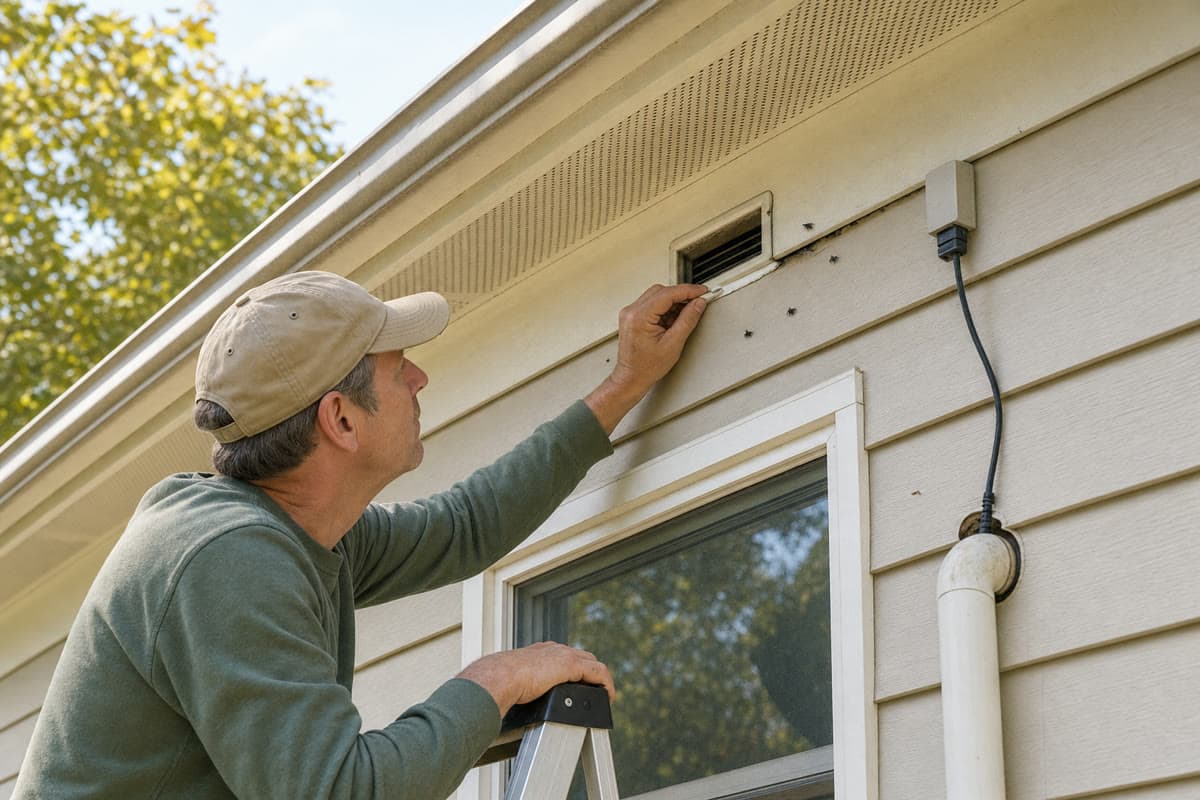
Start by identifying the fly and locating where immature stages could develop. For drain flies, inspect the organic film inside drains and other persistently wet areas. For house flies, correct waste, sanitation, screen, and door conditions. A sudden appearance of metallic blow flies can justify checking for a hidden organic source, but does not identify that source by itself. In regions with seasonal cluster flies, seal upper-wall entry gaps before adults move into buildings for winter shelter. Treatment should follow confirmed species and source evidence.
What Affects Cost
- ✓Species identification and affected zones
- ✓Property type, size, access, and sanitation complexity
- ✓Accessibility of drains, waste areas, attics, wall voids, and utility spaces
- ✓Need for exclusion, repair, cleaning, equipment movement, or monitoring
- ✓One-time inspection versus continuing commercial service
- ✓Follow-up and written warranty terms, if offered
Where are flies most concentrated?
When to Call a Professional
Request professional help in Louisiana when activity persists after accessible sources are cleaned, identification is uncertain, a commercial facility needs documented monitoring, pesticides may be considered, or the source may be inaccessible.
DIY vs Professional
Occupants can map sightings, photograph or retain a specimen, clean accessible organic residue, correct waste handling, dry wet areas, and repair simple screens or door gaps. Professional help becomes more valuable when the species or source is unclear or plumbing and structural investigation is needed.
Local Context
Long warm seasons, heavy moisture, food-service activity, multifamily buildings, ports, warehouses, storm recovery, outdoor waste, and animal areas create distinct drain, waste, entry, and concealed-source patterns. Warm and humid conditions can support extended activity, but the developmental source must still be confirmed at the property. The state name narrows climate and building context, but it cannot identify the species, source, or treatment required at a particular property.
The sighting pattern should determine the inspection route
A location name cannot identify the fly or its breeding source. Around Louisiana, record size, color, resting behavior, where adults collect, and when they appear. Then inspect the matching source category instead of treating every small fly or every large fly the same way.
Small flies near drains or wet areas
UC IPM explains that moth or drain flies develop in moist organic matter, often the film inside sink, shower, or sewer drains. Large numbers can point to a source larger than one drain. Confirm the site and remove the developmental material; spraying adults does not remove it.
UC IPM moth and drain fly guideHouse flies around doors, waste, or food
EPA identifies removal of animal waste, garbage, decaying plant material, and moist larval habitat as the main IPM opportunity. Screens and increased air movement can help with entry; traps are supplements, not substitutes for source correction.
EPA fly IPM strategiesWarm-weather development check
Warm conditions can shorten development for some nuisance flies, but weather alone does not identify the species. UC IPM recommends eliminating larval habitat and adult attractants, using screens and doors for exclusion, and treating chemicals as a limited tool rather than a substitute for sanitation and source removal.
UC IPM nuisance fly guideThis research layer summarizes public sources; it is not a local surveillance result, species identification, breeding-source finding, health determination, or substitute for an on-site inspection.
Review the evidence and correction policyPrevention Tips
- ✓Keep waste containers clean, closed, and emptied on a schedule matched to use.
- ✓Physically clean confirmed drain sources and correct contributing leaks or moisture.
- ✓Repair screens, sweeps, and gaps and avoid routinely propping doors open.
- ✓Clean pet and animal waste promptly and store feed securely.
- ✓Dry mops and cleaning tools and correct condensate or standing water.
- ✓Use dated monitoring records to confirm whether corrective actions reduce activity.
Frequently Asked Questions
What fly problems occur in Louisiana?
Does Louisiana weather identify the source?
How much does fly control cost?
Will spraying visible flies solve the problem?
How should a commercial program be documented?
Does Fly Exterminator perform treatments?
Related Pages
Content provenance and service transparency
General fly identification, source inspection, sanitation, exclusion, and prevention guidance is supported by the cited EPA and university extension references. Generated educational visuals are labeled and do not document a local provider or service visit. Species, breeding source, provider availability, pricing, products, credentials, and service terms require direct verification.
Published by Fly Exterminator · No named licensed-professional review is claimed · Updated 2026-09-01T23:50:00.000Z
How this content is produced and correctedRequest a Louisiana provider match
Compare written inspection scopes and provider terms