The short version
Around Southfield, flies are busiest from about May through September. Find their source: trash, drains, compost or a dead animal. Remove it, then seal gaps and screens.
- Flies breed in something nearby.
- Check trash, drains and compost first.
- Tape a drain overnight to test it.
- Big shiny flies can mean a dead animal.
- Screens and door sweeps keep them out.
Anyone in Southfield who wants flies out of the house.
What to look for
In summer heat, eggs become adults in about a week. Spraying the flies you see won't stop new ones. Flies don't come from nowhere. They breed in something nearby.
- 1Flies gathering at sunny windows.
- 2Tiny fuzzy flies near sinks and drains.
- 3Shiny green or blue flies indoors.
- 4Maggots in trash bins.
- 5Flies around compost or pet waste.
- 6A sudden bad smell with flies.
Why it’s worth acting soon
- Flies carry germs onto food and counters.
- Populations grow fast in warm weather.
- A dead animal smell gets worse.
- Cluster flies return every fall.
Treatment options and typical costs
Source Inspection and Fly Identification
$75–$200
A fly job starts with identification. Each fly has a different source. The technician then hunts for breeding material, not adults.
- Time
- 45–90 minutes
- Best for
- Every job; the species points to the breeding site
Exclusion: Screens, Door Sweeps and Air Curtains
$150–$450 (air curtains more)
Because cluster flies squeeze through very small gaps, exclusion in Southfield also covers soffit vents, siding overlaps and the spaces around utility lines. Fall is the time to do it.
- Time
- 1–4 hours
- Best for
- Buildings with steady fly entry from outside
Cluster-Fly Void Treatment, Sealing and Follow-Up Monitoring
$150–$500; follow-ups $50–$150
Sealing is the lasting part of cluster fly work: caulk around windows, screened vents and closed gaps at the roofline. Without it, next fall repeats this fall.
- Time
- 1–3 hours, plus scheduled checks
- Best for
- Cluster flies each fall; ongoing checks for commercial sites
Light Traps, Baits and Residual Resting-Surface Treatment
$150–$450
Light traps in Southfield homes and businesses are positioned away from doors and windows so they draw flies deeper inside rather than in from outdoors. Glue boards are swapped on a schedule.
- Time
- 1–2 hours
- Best for
- Knocking down adults while sources are fixed
Prices are typical published ranges. Ask what’s included before you compare quotes.
 Cluster flies spend the winter in attics and wall voids, then come out on warm days.
Which flies show up around Southfield.
House flies are the most common around Southfield. They breed in trash, compost and manure. Drain flies are tiny and fuzzy. They breed in the slime inside drains. Blow flies are shiny green or blue. A sudden swarm often means something died nearby. Cluster flies hide in attics and walls around Southfield for winter. They show up at windows on warm days. Fungus gnats hover around overwatered houseplants.
Local flies conditions in Southfield.
Southfield sits in a humid continental climate, and that sets the pace for fly activity here: spring through fall; cluster flies overwinter indoors. In Southfield, the area is mostly urban, so flies pressure can differ from one block to the next depending on how tight the entry points are and how much food, water, or shelter is close by. An inspection in Southfield usually starts outside and works inward, checking the foundation, gaps around doors and windows, and any moisture or clutter near the structure first. Knowing Southfield's seasonal timing lets you schedule treatment before the busy stretch rather than after it, which usually means faster service and a more accurate quote. A provider who works Southfield and Michigan every day can point out the specific conditions that matter most here, and getting the scope, price, and follow-up terms in writing makes it easier to compare options.
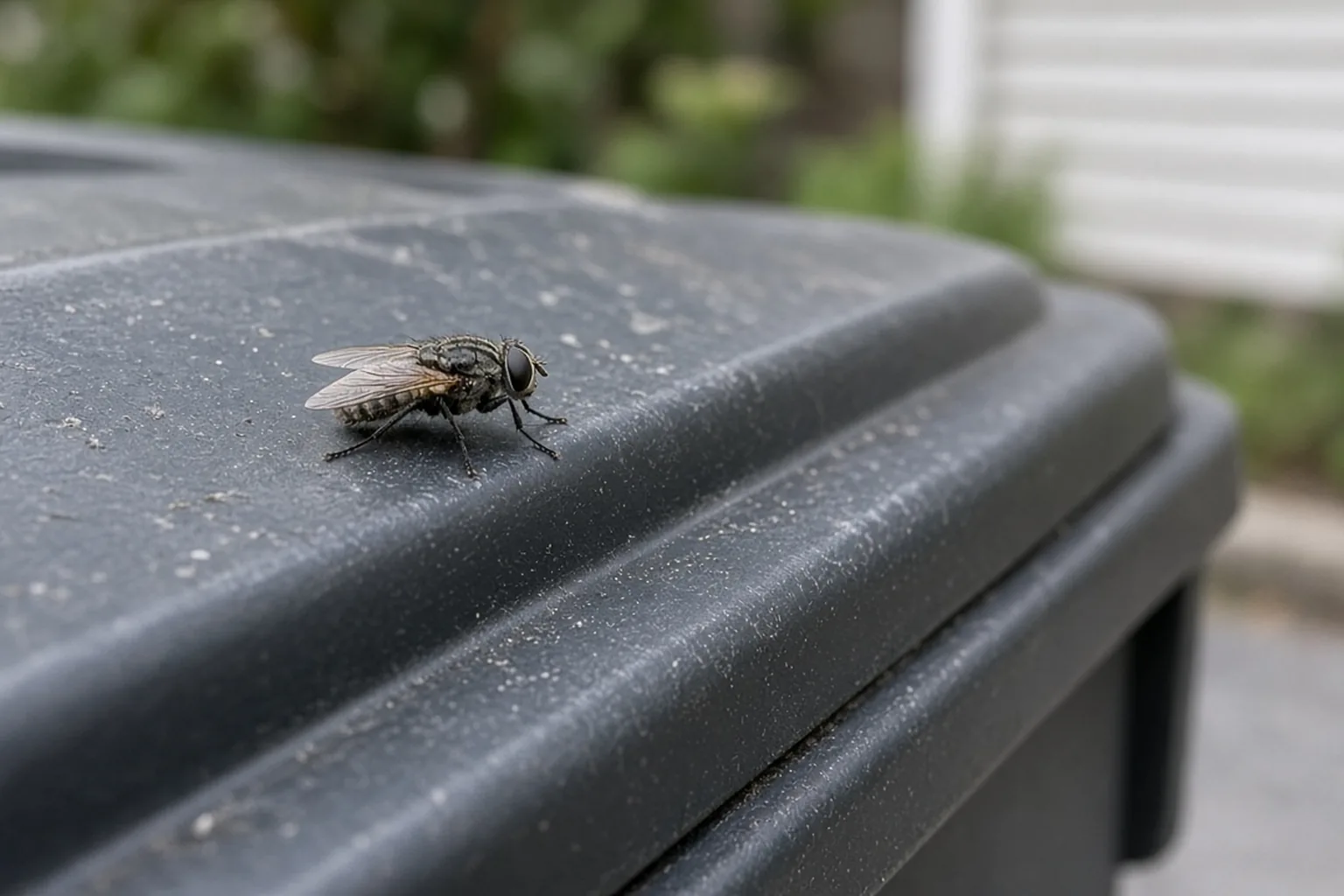 Trash bins are the top source in summer. Keep lids closed and rinse bins every week or two.
Fly season in Southfield.
The season is short but busy. Cluster flies move into walls in fall. Seal gaps before September.
Finding the source.
Watch where flies gather and where they're coming from. Check trash bins, recycling and compost first. Tape over a drain overnight. Flies stuck to it mean the drain is the source. Bad smell plus big shiny flies? Likely a dead animal. From Southfield out to Farmington Hills and Troy, trash bins in summer are the usual culprit.
A year of flies in Southfield.
- Spring: flies return in May. - Summer: peak season in Southfield. Empty trash often. - Fall: cluster flies move into walls. Seal gaps early. - Winter: cluster flies appear at windows on warm days.
Which fly is it?
- House fly: gray, a quarter inch, everywhere. - Drain fly: tiny, fuzzy, moth-like wings. - Blow fly: shiny green, blue or bronze. - Cluster fly: big, slow, golden hairs. - Fungus gnat: tiny and black, near plants. - Fruit fly: tan with red eyes, near ripe fruit.
Cleaning a drain fly drain.
- Scrub: run a stiff brush down the drain. - Enzyme: pour in an enzyme drain cleaner at night. - Repeat: do it daily for a week. - Check: tape over the drain to see if flies still emerge. - Skip: bleach alone doesn’t clear the slime.
Keeping flies out.
- Screens: patch holes in windows and doors. - Sweeps: add door sweeps to exterior doors. - Trash: keep lids closed and rinse bins. - Compost: cover it and keep it away from doors. - Pets: pick up waste daily.
Fly traps that actually help.
- Sticky ribbons: fine for garages and sheds. - UV light traps: best for kitchens and businesses. - Bait traps: hang them outside, away from doors. - Swatter: still works for a few strays. - Skip: bug bombs. They don’t reach the source.
If something died nearby.
Follow the smell and the flies. Wear gloves, bag it, and disinfect the spot. A wall may need a small hole opened. The flies stop once the source is gone.
Flies and pets.
Pet food and waste draw flies fast. Pick up food bowls after meals. Clean up the yard daily in summer. Flies biting a dog's ears are usually stable flies. Ask your vet about protection.
Flies at a business.
Restaurants and food businesses need a steady routine. Seal dumpsters and clean them weekly. Use air curtains or strip doors at busy entries. Schedule drain cleaning and regular service visits.
Flies and food safety.
Flies land on trash and then on food. Cover food outdoors and wipe counters often. Throw out food flies have landed on for long. Keep fruit in the fridge in summer.
What a fly visit looks like.
The tech looks for the source first. They check trash areas, drains, attics and gaps by doors. Then they clean, seal or treat what they find. Traps help confirm the problem is gone.
Screens and doors.
- Screens: patch holes and check the corners. - Doors: add sweeps and keep them closed. - Patio doors: a screen door helps in summer. - Fans: a fan by the door keeps flies moving on.
Compost and yard waste.
Flies breed in wet, rotting material. Keep compost covered and turn it often. Bag clippings. Pick up fruit and pet waste every few days.
Trash day habits.
Bag food scraps tightly before they go in the bin. Rinse bins every couple of weeks in warm weather. Keep lids shut and park bins away from doors.
Questions to ask before you sign.
- What kind of fly is it? - Where are they breeding? - What will you clean, seal or treat? - Are follow-up visits included? - Is dead animal removal extra?
What affects the price
- Follow-up visits and monitor replacement.
- Size of the building and attic for cluster flies.
- Plumbing repairs for slow drains or broken lines.
- Number and type of light traps installed.
- Travel distance and local labor rates.
- Fly species and where it breeds.
📊
What bothers you most about flies?
When to call for help
Call if you can't find the source after a few days. if you smell something dead in a wall. if cluster flies come back every fall. Businesses usually need regular service.
What you can do yourself
Most home fly problems are DIY. Find the source and remove it. Clean drains, rinse bins and fix screens. A pro helps with hidden sources, walls and attics.
Flies in Southfield
Summer highs near 83°F in Southfield speed up the fly life cycle, so trash and compost need extra care. With about 34 inches of rain a year, damp spots around Southfield also breed small flies. In denser parts of Southfield, dumpsters, alleys and restaurant trash are the big sources.
Fly tips from the experts
Where are the flies coming from?
The kind of fly tells you where to look. Around Southfield, Michigan, note its size, where it gathers and when it shows up. Then go after the source.
Small flies near drains
Tiny, fuzzy flies near a sink or shower usually breed in the slimy film inside the drain. Scrub the drain with a stiff brush. Spraying the adults won’t stop them.
UC IPM: drain fliesHouse flies around doors and trash
House flies breed in garbage, pet waste and rotting plants. Clear those out first, then add screens and keep doors closed. Traps help, but they don’t fix the source.
EPA: managing fliesSlow flies at the windows in fall?
In colder states like Michigan, sluggish flies at upstairs windows in fall, winter or early spring are often cluster flies. They spend winter in attics and walls but don’t breed indoors. Sealing gaps outside in late summer keeps them out.
University of Minnesota Extension: fliesBased on guidance from university extension services and the EPA.
How we check our sourcesLocal research
Flies in Southfield, MI: what the public record shows
Before you compare quotes, it helps to know which flies actually live in Michigan, when they are busiest around Southfield, and what the state figures look like. Everything below links to the agency or university page it came from.
Michigan layer and turkey inventory, 2022 Census of Agriculture
Michigan's layer flock is among the largest in the country, and confined poultry manure is a primary house fly breeding substrate near those operations.
USDA National Agricultural Statistics ServiceWhen flies are busiest around Southfield
July–August. Short outdoor season; at 60°F the house fly cycle stretches to about 45 days, so spring pressure builds slowly and peaks in late summer heat.
Based on Southfield’s humid continental climate profile.
Michigan's state manure guidance treats fly breeding as a function of decomposition and final moisture content, so keeping manure and compost dry and fully decomposed is the state-recognized control lever.
Rules that apply in Michigan
Sources: USDA National Agricultural Statistics Service; Michigan Commission of Agriculture and Rural Development / MDARD; Texas A&M AgriLife Extension; University of New Hampshire Extension. Figures are quoted as the source prints them. How we check our sources
Simple ways to keep flies away
- Keep trash bins closed and rinse them.
- Take trash out often in summer.
- Repair window and door screens.
- Add door sweeps.
- Pick up pet waste daily.
- Clean drains with a brush and enzyme cleaner.
 A good quote names the fly, the source, and what will be cleaned, sealed or treated.
Did you know?
Fly specks on ceilings are regurgitated food and waste
A house fly generation can take ten days in heat
Questions people ask
What should be in a fly control quote?
Fly type, source, what gets treated or sealed, and follow-ups.
Do flies mean there is a dead animal in my wall?
Sometimes. Big shiny flies swarming often mean a dead mouse. A bad smell is another clue.
Can flies come from my neighbor's property?
Yes. House flies travel a mile or more. Your own trash and compost still matter most.
Do I need ongoing fly service?
Homes rarely do. Restaurants, farms and food businesses often need regular service.
How do restaurants control flies?
Strict cleaning, sealed trash, air curtains and fly lights. Drains get cleaned on a schedule.
What does professional fruit fly control cost?
Local quotes vary; ask for a written estimate. It's a published estimate, not a local quote.
Do customers tell restaurants when they see a pest?
In Southfield, flies are controlled by finding and removing the breeding source — the garbage, food, or moisture they are drawn to. In Southfield, cleaning the source and setting traps handles the adults, and because flies reproduce quickly, source removal is the part that actually stops them.
Are cluster flies common in Southfield?
Yes, they're a fall and winter nuisance around Southfield. Seal gaps around windows and siding before September.
When is fly season in Southfield?
Flies are busiest from about May through September. Cluster flies also appear at windows in winter.
Nearby cities
Related guides
Sources (13)
The facts in this article come from the public sources listed above. Every home is different, so ask the company you talk to about pricing and what’s included. Published by Fly Exterminator · Updated September 11, 2026 · How we write these guides